
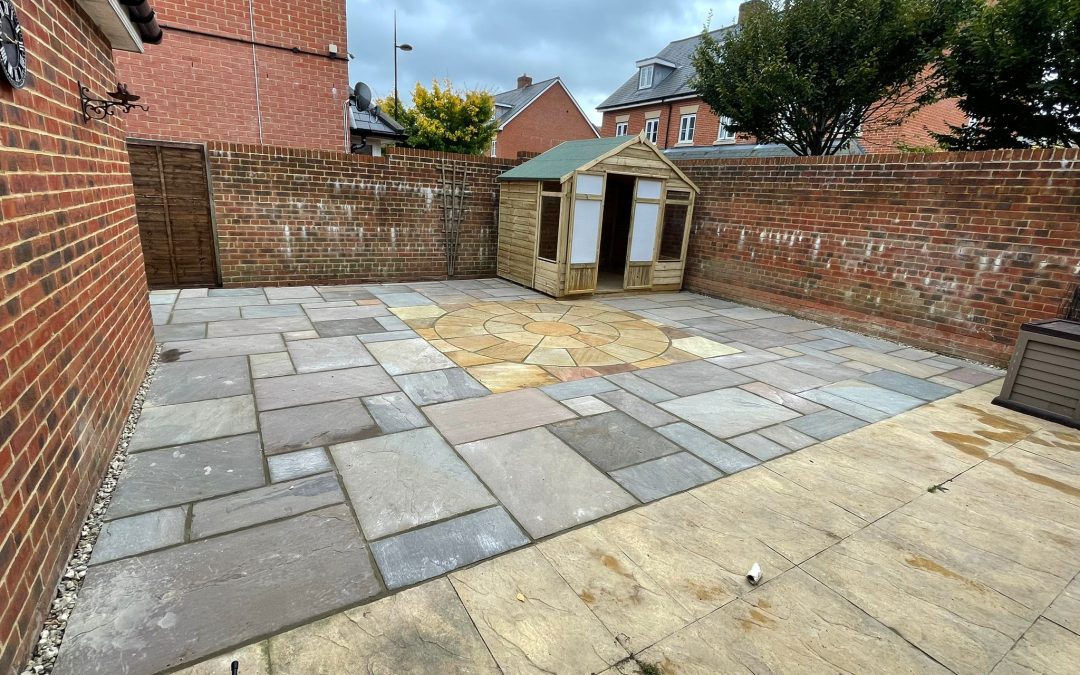
Sandstone vs Porcelain for Patios and Paving…
When it comes to designing your garden, choosing the right paving material is a crucial decision. Sandstone paving and porcelain tiles are two popular options for UK homeowners, each with its own set of advantages and disadvantages. To help you make an informed choice, we’ve compared these materials based on durability, aesthetics, maintenance, cost, and suitability for the UK’s climate.
Sandstone Paving - Pros
- Natural Beauty: Sandstone offers a timeless, natural appearance with unique textures and earthy tones that blend seamlessly with outdoor spaces.
- Versatility: Available in various colours and finishes, sandstone complements both traditional and modern garden designs.
- Durability: Sandstone is sturdy and can withstand moderate foot traffic, making it ideal for patios, pathways, and garden seating areas.
- Slip Resistance: The naturally textured surface of sandstone provides good grip, even in wet conditions.
Eco-Friendly: Being a natural material, sandstone is more environmentally friendly than synthetic options.
Sandstone Paving - Cons
- Porosity: Sandstone is porous and can absorb water, which may lead to staining or algae growth if not properly sealed.
- Maintenance: Requires regular cleaning and sealing to maintain its appearance and durability.
- Weathering: Over time, sandstone can weather and fade, especially when exposed to harsh weather conditions.
- Cost: High-quality sandstone can be expensive, and installation costs may also add up due to its weight and thickness.
Porcelain Tiles - Pros
- Durability: Porcelain is exceptionally hard-wearing and resistant to scratches, cracks, and chips, making it ideal for high-traffic areas.
- Low Maintenance: Non-porous and stain-resistant, porcelain tiles are easy to clean and don’t require sealing.
- Weather Resistance: Porcelain is frost-proof and highly resistant to weathering, making it suitable for the UK’s wet and cold climate.
- Variety: Available in a wide range of colours, patterns, and finishes, including designs that mimic natural stone.
- Modern Look: Porcelain tiles provide a sleek, contemporary appearance that’s perfect for minimalist garden designs.
Porcelain Tiles - Cons
- Cost: High-quality porcelain tiles can be expensive, and professional installation is often required due to their density and precision cutting.
- Slipperiness: Some porcelain tiles can become slippery when wet, though anti-slip finishes are available.
- Appearance: While versatile, porcelain lacks the organic charm and warmth of natural stone like sandstone.
- Complex Installation: Requires a level and well-prepared base to ensure proper adhesion and drainage.
Comparing the Two: Which Is Better for UK Gardens?
Durability: Both sandstone and porcelain are durable, but porcelain edges out due to its resistance to scratches, weathering, and frost. Sandstone, while sturdy, is more prone to wear and requires sealing to protect against the elements.
Aesthetics: If you’re looking for a natural, rustic feel, sandstone is the clear winner. However, for a sleek and modern look, porcelain tiles are unmatched.
Maintenance: Porcelain tiles require significantly less upkeep compared to sandstone, which needs regular sealing and cleaning to prevent staining and weathering.
Cost: Both options can be expensive, but sandstone’s higher maintenance costs over time might make porcelain a more cost-effective choice in the long run.
Suitability for UK Climate: Porcelain’s frost resistance and non-porous nature make it better suited for the UK’s wet and cold weather. Sandstone, while functional, requires more care to prevent issues like algae and frost damage.
Conclusion
Choosing between sandstone paving and porcelain tiles depends on your personal preferences, budget, and garden design goals. For a classic, natural look and a traditional vibe, sandstone is an excellent choice. However, if you’re after low maintenance, durability, and a contemporary aesthetic, porcelain tiles are the way to go.
Consider consulting with a professional landscaper (like Top Dog) to assess your garden’s layout and climate conditions before making your final decision. Both options can transform your outdoor space – it’s all about finding the one that aligns best with your vision.